How to Prevent Commercial Roof Leaks Before They Impact Your Business
Five proactive maintenance strategies every facility manager should use to reduce risk, avoid costly repairs, and protect daily operations.
Commercial roof leaks rarely happen overnight.
Most begin as small, preventable issues that go unnoticed. Before long, they can interrupt operations, damage inventory, create safety hazards, or require expensive emergency repairs. What starts as a clogged drain or a small membrane puncture can quickly become a much larger problem if left unaddressed.
The good news is that many commercial roof leaks can be prevented with a proactive maintenance strategy.
Many commercial roof failures can be traced back to deferred maintenance or issues that could have been identified earlier through routine inspections. Taking a proactive approach helps identify small problems before they turn into costly repairs, unexpected downtime, or premature roof replacement.
Routine inspections, timely repairs, and regular roof maintenance help extend the life of your roof. They also protect your employees, customers, equipment, and daily operations from unnecessary disruptions.
Here are five ways to help prevent commercial roof leaks before they impact your business.
1. Schedule Routine Roof Inspections
One of the most effective ways to prevent commercial roof leaks is through regular inspections.
Many roofing issues begin long before they are visible from inside the building. Small punctures, deteriorating sealants, loose flashing, or clogged drainage systems often go unnoticed until water finds its way inside.
Schedule a professional roof inspection at least twice a year, typically in the spring and fall. It’s also a good idea to schedule an inspection after major weather events. This helps identify potential problems early, when they are usually faster and less expensive to repair.
Routine inspections also provide valuable information for long-term maintenance planning, budgeting, and future roof replacement.
2. Keep Drains, Gutters, and Roof Surfaces Clear
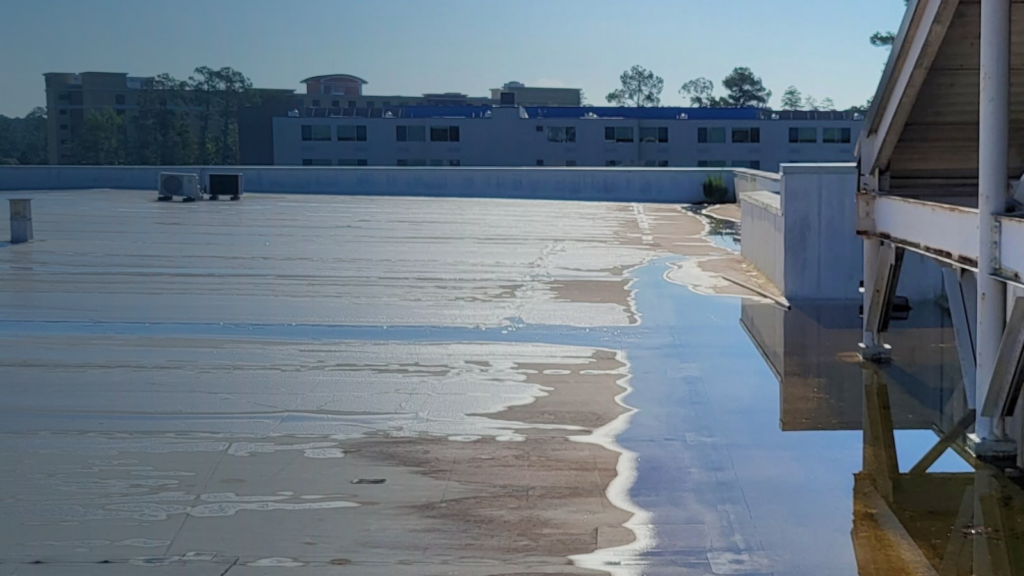
Water should never remain on a commercial roof longer than necessary.
Leaves, dirt, branches, and other debris can block drains and gutters, causing water to collect on the roof. Over time, standing water can accelerate roof deterioration, increase the likelihood of leaks, and place additional stress on the roofing system.
Regular roof clean up helps maintain proper drainage while giving maintenance teams the opportunity to identify developing issues before they become major repairs.
A clean roof is not only more attractive, it is also better protected.
3. Address Small Repairs Early
Loose flashing, cracked sealant, punctured membranes, or minor storm damage can quickly become much larger problems when exposed to additional rain, heat, and changing weather conditions.
Addressing these issues early helps preserve the integrity of the roofing system, reduce long-term repair costs, and extend the life of the roof.
Waiting until water enters the building often means the damage has already spread beyond the roof itself.
4. Don’t Overlook Rooftop Equipment
Many commercial roof leaks begin around rooftop penetrations rather than the roof membrane itself.
HVAC units, vents, skylights, pipes, satellite equipment, and other rooftop systems all rely on properly sealed flashing to keep water out. Foot traffic from service technicians can also unintentionally damage roofing materials over time.
Including rooftop equipment as part of your routine roof maintenance program helps reduce the risk of leaks developing in these vulnerable areas.
5. Plan Ahead for Roof Replacement
Even the best-maintained commercial roof will eventually reach the end of its service life.
Instead of waiting for a major leak or emergency failure, facility managers should use inspection reports and maintenance history to plan for future replacement.
Planning ahead makes budgeting easier and helps minimize disruptions to daily operations. It also allows you to replace the roof at the right time instead of during an emergency.
A planned roof replacement is almost always less disruptive and often more cost-effective than an unexpected one.
Protect Your Roof. Protect Your Business.
Your commercial roof does much more than keep the weather out. It protects employees, customers, inventory, equipment, and the daily operations that keep your business running.
A proactive maintenance program is one of the smartest investments a building owner or facility manager can make. Routine inspections, preventative maintenance, timely repairs, and long-term planning all work together to reduce the likelihood of costly roof leaks. They also help extend the life of your roofing system.
If it has been a while since your last roof inspection, now is the perfect time to take a proactive approach.
Contact Mid-South Roof Systems today to schedule a professional roof assessment and learn how a preventative maintenance program can help protect your facility, your operations, and your investment for years to come.
LIKE WHAT YOU JUST READ?
Sign up for our newsletter to get fresh articles, updates and more!
Assess, Report and Decide: Get to Know Your New Building’s Roof
If you’re considering buying a new building, the very first item on your list should be to get an assessment of the roof’s condition. This analysis can prevent surprises down the line and—if the roof needs work—it can have a dramatic effect on the price you wind up paying for the building.
Why You Need A Roofer Onsite When You Install Your HVAC System
It’s common to place the heating, ventilating and air conditioning (HVAC) systems for large buildings on the roof. A successful rooftop HVAC installation usually involves the collaboration of an entire team of workers, so that issues related to the roof, structures, electrical and HVAC can be discussed beforehand. If an HVAC system is not coordinated…